
An open bed doesn't wait for a manual review to finish
Referrals arrive through different hospital networks, portals, faxes, and inboxes, so building one complete picture of a prospective resident means logging into several systems and piecing it together by hand. By the time clinical and financial fit are both confirmed, the bed may already be gone.
Without consolidated referral intake
- Referral packets arrive across separate hospital networks, portals, faxes, and inboxes, each requiring its own login.
- Clinical and financial fit are assessed separately, often by different people, adding time before a decision is possible.
- Insurance and payer information is verified manually, sometimes after a decision has already been made.
- Hospital case managers and discharge planners are reached by phone or email outside any shared record of the conversation.
- Referral status lives in someone’s memory or a spreadsheet, not a shared view the whole team can see.
With Carefeed AI Referral Management
- Every referral lands in one place regardless of which network, portal, or channel it arrived through.
- Referral profiles are built automatically, with clinical, demographic, and financial information organized before anyone opens the file.
- Insurance eligibility and payer information are verified as part of the intake process, not after the fact.
- Hospital case managers and discharge planners are reached through a direct messaging channel inside the platform.
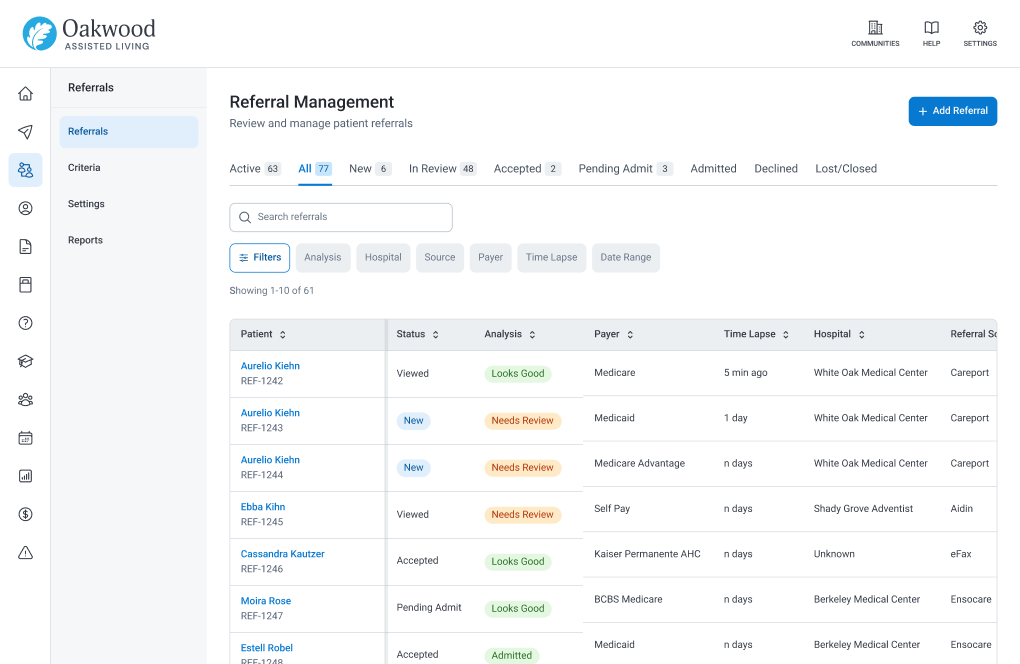
- Every referral’s status is visible in one dashboard, shared across the whole admissions team.
The Referral Management workflow
From first contact to admission decision, one connected process
Multi-Source Referral Intake
Referrals arrive automatically from the major hospital referral networks, EHR systems, and communication channels your referring partners already use, along with fax, email, and manual upload for anything that arrives outside those channels. Hospital case managers and discharge planners don't need to learn a new portal or change how they already send referrals; Carefeed meets those referrals where they already are.
The Referral Profile
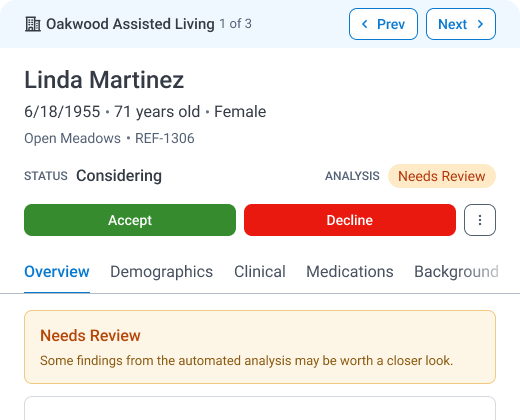
When a referral arrives, Carefeed builds a structured profile automatically: demographics, diagnosis codes, medications, insurance and payer information, clinical notes, and physician orders, extracted directly from the referral documents. Every extracted detail links back to its source document, so a team member can verify context in seconds rather than re-reading the full packet.
Staff remain in control of every decision. The system surfaces and organizes the information. The team decides.
Flagging what matters
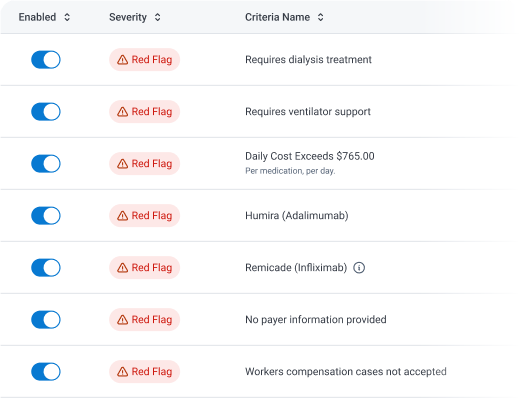
Communities configure their own admission criteria, clinical needs, payer mix, diagnosis categories, and acuity levels. Carefeed’s AI tools evaluate each incoming referral against these custom standards, not a generic template. Decision makers see flagged clinical and financial factors, including how a referral is likely to perform under PDPM and managed care reimbursement models.
The recommendation is a starting point for review, not an admission decision. The team makes the final call on every referral.
The Referral Dashboard
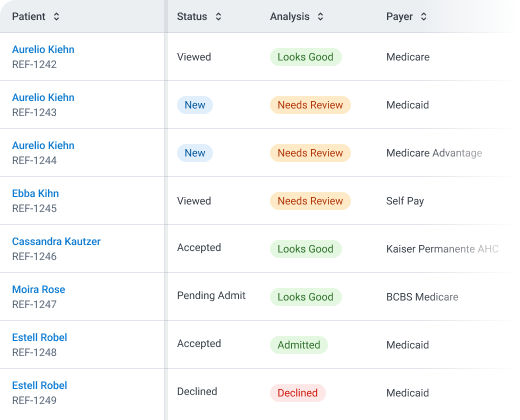
Every open, pending, and historical referral is visible in one dashboard, organized by status, source, and how long each has been waiting for a decision. Multi-site operators see referral activity across every community in one unified view, without pulling a separate report from each location.
Collaboration & Hospital Messaging
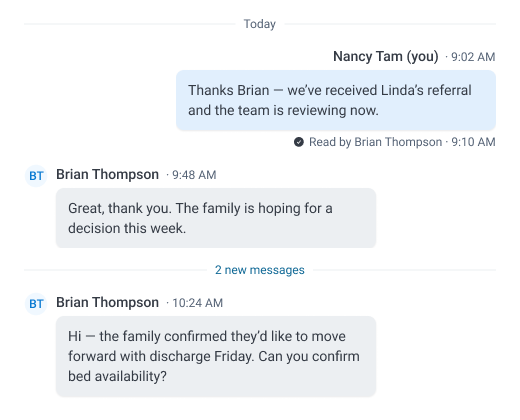
Admissions teams leave comments and tag colleagues directly on a referral, building a shared, timestamped record of who did what and when. A built-in messaging channel connects your team directly with the referring hospital's case manager or discharge planner. A question gets answered inside the platform, not through a phone call or a separate email thread.
Reporting & Analytics
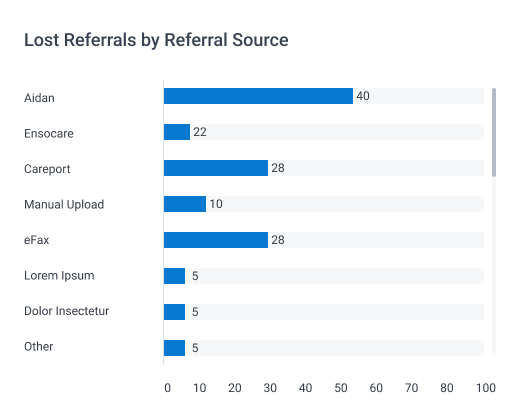
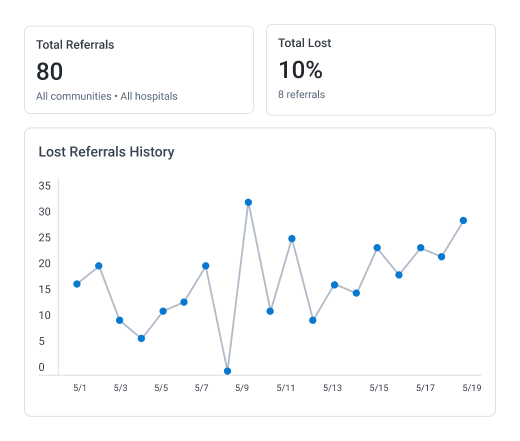
Built-in reporting shows referral volume by source, accept and decline rates, time-to-decision, and which referring partners are sending the most placements. Admissions and business development leaders have a clear view of where the pipeline is most successful.
Proven Outcomes
What our communities are saying
75%
Manage admissions in under 30 minutes.
Down from 90 to 120 minutes before adoption.
67%
Report fewer or eliminated admissions errors.
Compared to manual intake processes. More than half report fewer move-in delays.
Frequently asked questions
How does AI-assisted referral review work?
Carefeed extracts clinical, demographic, and financial information from each referral automatically and evaluates it against the admission criteria your community has configured. The system surfaces information based on your preferences; it does not make the admission decision. Staff review every recommendation and make the final call.
Do our hospital referral partners need to change how they send us referrals?
No. Carefeed receives referrals through the networks, portals, and channels your partners already use. Hospital case managers and discharge planners don't need to learn a new system to keep working with you.
Does this integrate with PointClickCare?
Yes. Carefeed is a certified integration in the PointClickCare Marketplace. When a referral is accepted, Carefeed can automatically create the Pending Resident record in PointClickCare, with data flowing between both systems.
How does the Decision Engine evaluate financial fit?
The Decision Engine considers payer mix, insurance information, and how a referral is likely to perform under PDPM and managed care reimbursement models, alongside clinical fit, giving your team a fuller picture before a decision is made.
Can we set our own admission criteria, or is this a fixed model?
Admission criteria are configurable per community, clinical needs, payer mix, diagnosis categories, and acuity levels are all set by your organization, not a generic industry template.
Does this work for multi-site organizations?
Yes. Multi-site operators see referral activity and decision status across every community in one dashboard, with the ability to compare performance location to location.
Can staff review and act on referrals from a phone or tablet?
Yes. Referral review and decision-making are accessible from any device, not limited to a desktop admissions workstation.
What makes this different from a standard referral portal?
Most referral tools organize intake. They don't evaluate it. Carefeed identifies clinical and financial fit automatically and surfaces the information your team needs to decide quickly, rather than just giving you a place to receive documents.
Get Started
Every referral, evaluated the same way, every time
Referrals shouldn't depend on which network sent them or who happened to see the fax first. Carefeed brings every referral into one place, evaluates fit automatically, and keeps your team and your hospital partners in sync from first contact to admission decision. When you're ready, we're here to help with ongoing support from your dedicated client experience team.